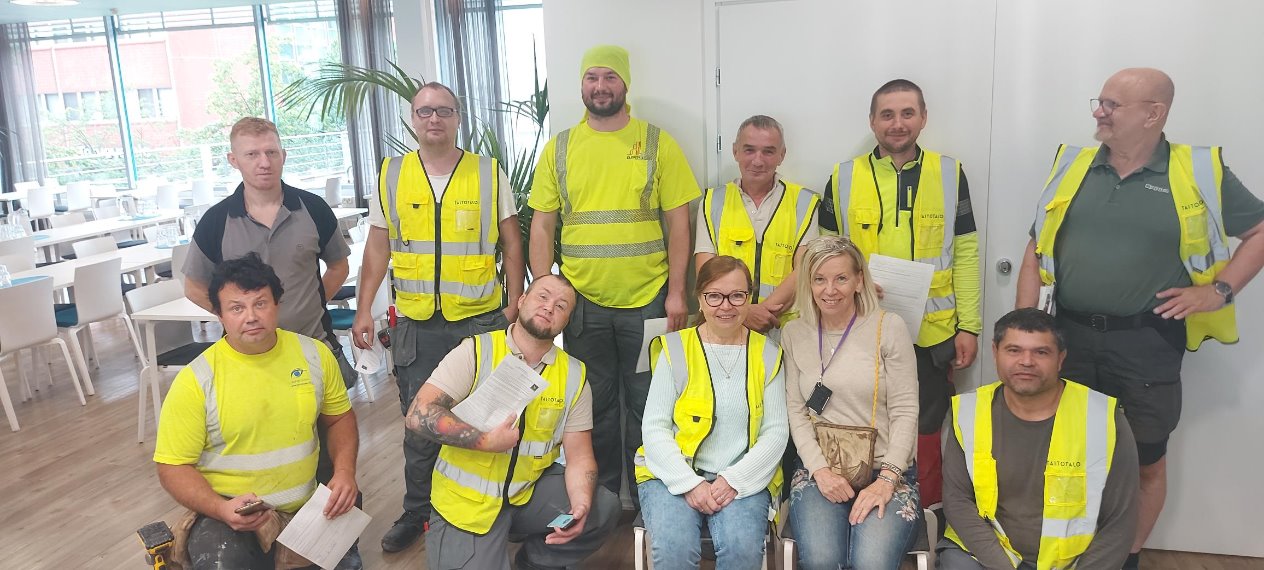
Taitotalo has a long history of conducting skills assessments for immigrants. From the project’s perspective, it is relevant to note that between 2023 and 2025, these assessments were organized nine times a year across different sectors. The assessments in the social and health care sector and the construction sector were the most popular, attracting the highest number of applicants. Participants came from a wide range of countries. The assessments ended at the end of 2025 when the Helsinki employment services stopped purchasing the service.
Following the outbreak of Russia’s war of aggression against Ukraine, the proportion of Ukrainian participants in the assessments also increased. On 28 August 2023, a construction-sector skills assessment was organized specifically for Ukrainian refugees who had arrived in Finland. An interpreter was available during the assessment. The aim was to assess participants’ existing skills at an early stage so that their career planning could get underway as quickly as possible. To recruit participants, Taitotalo collaborated with several organizations and cities involved in providing volunteer support to Ukrainians. The skills assessment was conducted with the assistance of interpreters.
During the assessment, it became clear that the participants had surprisingly strong technical skills, many of which they had acquired through practical work experience. The vocational teachers conducting the assessment praised the men’s professional skills. The main challenge, however, was their very limited Finnish language skills. An interesting observation was that, although an interpreter was needed during the theoretical sessions and interviews, the participants’ strong professional skills in the practical workshops seemed to make communication with the supervising teachers quite effectively even without an interpreter.
At the same time, many construction sites in Finland employ Russian- and Ukrainian-speaking workers, including in team-leader roles, meaning that workers can receive support within their teams even when their Finnish language skills are still limited. One of the key messages of the assessments to employers was therefore that language skills can also be developed through working and interacting in the workplace.
Following the assessment, each participant received a written evaluation of their vocational skills, including areas requiring further development, as well as a plan for their next steps. This follow-up plan was important both for the participant and for the employment authorities, through whom, for example, vocational labour market training can be provided.
The assessment was highly significant for a person who had come to a foreign country, without language skills or the ability to manage everyday matters independently. The feedback on their professional skills and competencies undoubtedly gave them hope and strengthened their self-confidence.